
CFD Accuracy in the Age of AI
Accuracy is the Holy Grail of CFD. Ask any simulation engineer what they want from their CFD software. I guarantee that accuracy will always be in the top 3 and most often right the number one priority. We want our simulations to predict reality as accurately as possible. Preferably quickly, robustly, automatically, and at a reasonable cost. Sounds like not asking much, right?
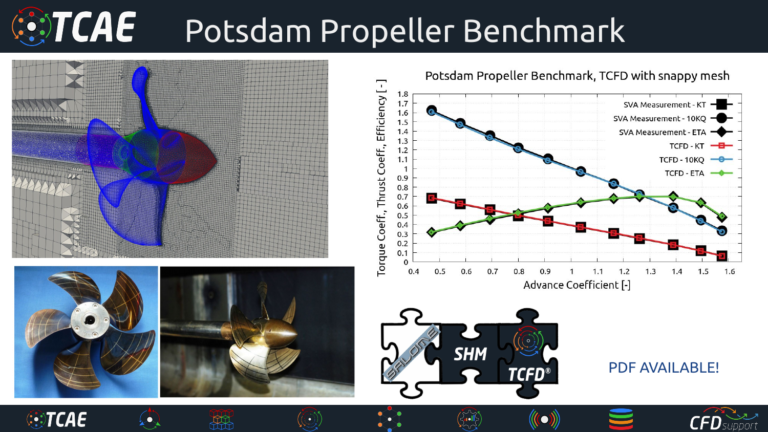
Artificial intelligence is now entering the game. In fact, it already has and isn’t going anywhere. AI agents can prepare simulations, generate meshes, select settings, monitor convergence, post-process results, and write reports. Surrogate models can predict results in seconds instead of hours. New LLMs can generate new solver code almost instantly.
So, naturally, there is a question: Will AI make CFD more accurate?
Speaking just for myself, in the middle of 2026, I am not so sure.
What Does Accuracy Actually Mean?
Before discussing AI, there is a small problem with the term accuracy itself. We usually judge CFD accuracy by comparing simulation results with an experiment. I wrote about this years ago in my article CFD is not a calculator. CFD is an approximation, measurement is an approximation too, but CFD is expected to chase the experiment, not the other way around.
Rules of the game?
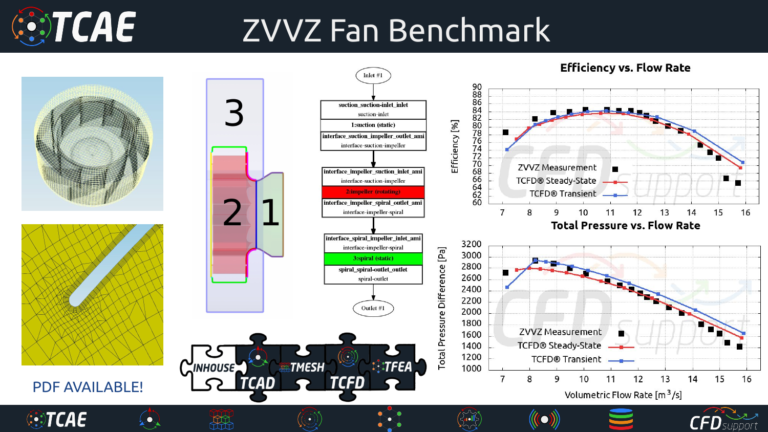
Imagine we are benchmarking a pump. We have a physical pump on a test bench and its virtual sibling in CFD. What exactly should the CFD reproduce? The pump as designed? The pump as manufactured? Or the complete experimental installation? Should we model the inlet pipe? How much of it? The outlet? Leakage paths? Sealings? Gaps? Surface roughness? Manufacturing imperfections? What about the velocity profile or turbulence intensity actually entering the pump? What are the real fluid properties? Is the experiment really steady enough to compare against a steady-state CFD result? Should we run transient? For how long? What should we average, and how? Compare with exact measurement probes, or even model them too?
Then comes the CFD side. Mesh strategy. Boundary layers. Interfaces. Near-wall treatment. Turbulence model. Y+. Numerical schemes. Solver tolerances. Convergence criteria. Time step. Simulation time. … All of them down to the granularity of hundreds of parameters.
An experiment is itself a model of reality. A wind tunnel is not an infinite atmosphere. Effect of boundary conditions. A pump test bench is not the real piping system. Sensors have uncertainty. Geometry has tolerances. Operating conditions fluctuate. To validate CFD against an experiment properly, we therefore have to reproduce not only the investigated object, but enough of the experiment itself.
And somewhere between the person who performed the experiment, the person who delivered the geometry, the CFD engineer, the customer, and the final report, something almost always gets lost in translation.
Suddenly, comparing CFD with experiment becomes a surprisingly complicated job to do. With our simulation, are we mimicking reality or the experiment? Ok, most often, it’s the experiment, with the hope that things will work out in reality too. But let’s keep this for some of the next articles …
Accuracy Has a Price
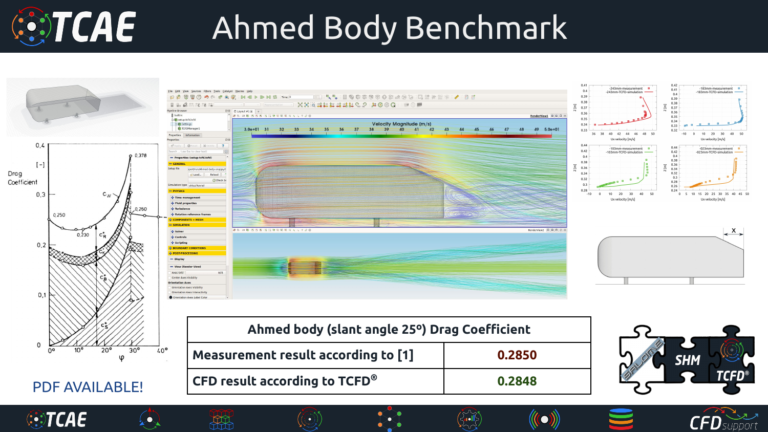
I explored this idea in my earlier article, CFD Project Accuracy vs. Effort. My observation from hundreds of consultancy projects was simple: getting some CFD result is relatively easy. Getting a reasonably good result requires more work. Getting a really accurate result can require dramatically more work. The effort is highly nonlinear. And I think it will remain so with/after the AI era. As I described in CFD in the Age of AI; AI agents are beginning to automate large parts of CFD project work.
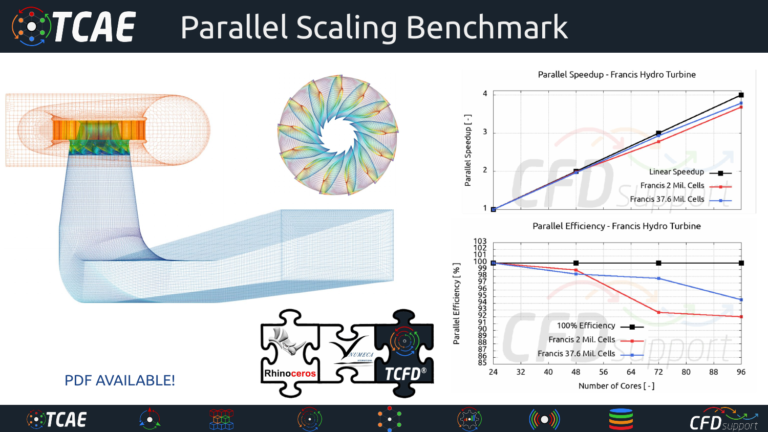
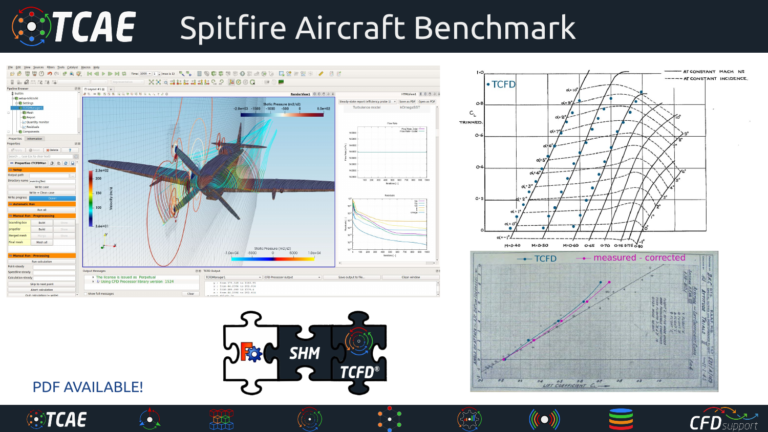
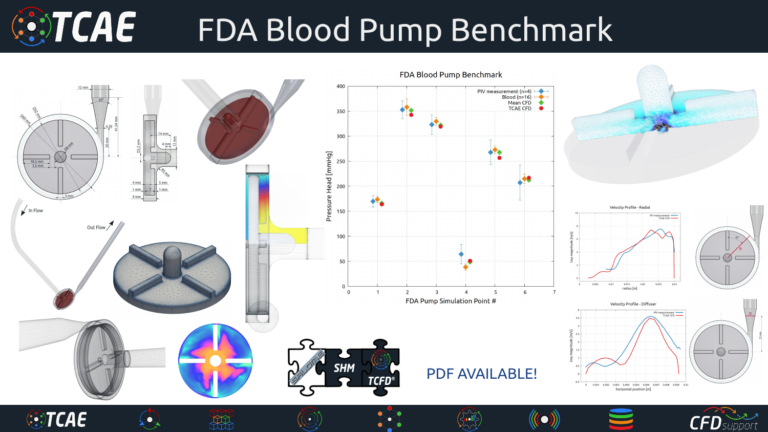
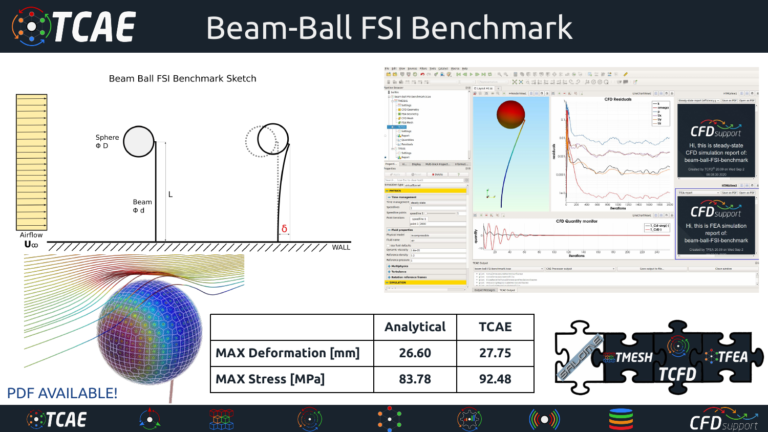
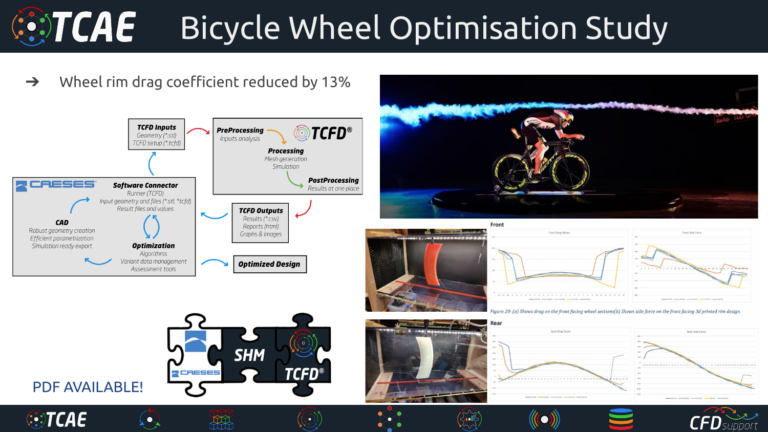
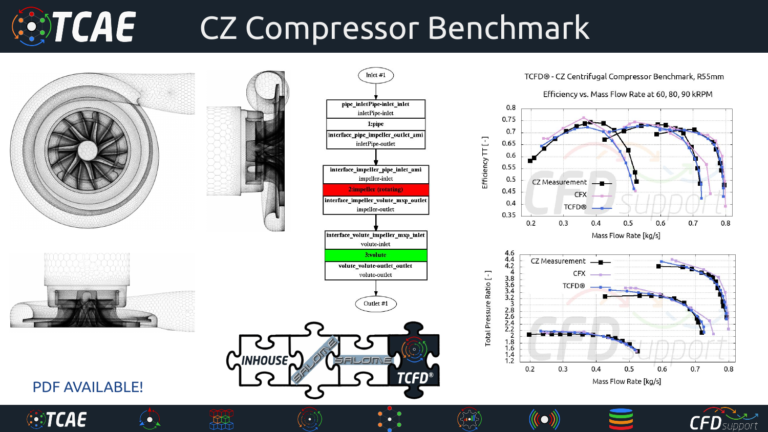
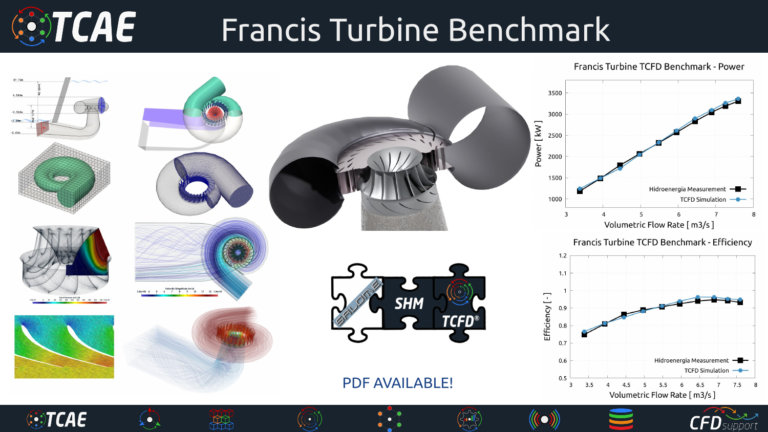
In the company I work for, over 16 years, we delivered hundreds of CFD consultancy projects, and many of them were compared with physical experiments. Some of them are publicly available on CFDSUPPORT’s website. Hardly any of the successful projects with comparisons have taken less than 20 man-days of our best engineers.
Need for Expert in the Loop
My current impression is that an AI agent can get surprisingly far, surprisingly quickly. Let me put completely non-scientific numbers on it just to illustrate the point. An AI agent may get you to 80% project maturity almost immediately. (This parallel is even more visible when {vibe} coding a new app.) The first 80% in a heartbeat. And that is fantastic. It can quickly make the standard procedures, create the case consistently, and even run it. Human errors such as typos, forgotten settings, wrong file versions, or missed workflow steps should decrease dramatically. Getting to 80% will become cheap. And it may be sufficient for many. The problem comes when accuracy isn’t good enough. To get to a 90% level of project maturity (accuracy-oriented), it may take quite some expert effort. And every extra percent costs you enormous extra effort.
A big problem is that nowadays, these final few percent often require something AI agents are still poor at: stepping outside the established workflow. To be able to think out of the box. In other words, experts will still be necessary to achieve top results.
The Most Valuable CFD Decision May Be to Start Again
This is perhaps where human expertise is hardest to automate. An experienced engineer can look at three days of work and say: This whole approach is wrong. Let’s start again. Change the domain. Question the experiment. Change the physical model. Run a completely different simulation. Measure something else. Ask whether the quantity we are chasing is even the right quantity. Perhaps add a few additional web meetings to make clear the understanding and goal. Or even decide that CFD is not the right tool for this question at all. That ability does not come primarily from knowing where the particular settings are located in the software. It comes from hard-fought wisdom. From projects that failed. From simulations that looked beautiful and were wrong. From crazy ideas that initially made no sense. From seeing similar strange patterns twenty times before. Experience is essentially a large private database of mistakes, successes, patterns, and intuition accumulated over years. AI has enormous knowledge. But knowledge and wisdom are not quite the same thing.
Where Does Accuracy Come From?
This brings me to the central question. Where does CFD accuracy actually come from? From experience, effort, dedication, and certainly from good software. CAE software development is difficult precisely because engineering software has to respect physical laws. While technology is changing quickly, nature isn’t going anywhere in this respect. Gravity and conservation laws remain the same. The human brain (and its limits) has not changed for thousands of years. What AI can change dramatically is the process between them (technology <-> brain). Agents can save a lot of time and reduce human error.
Reliability and accuracy are not exactly the same thing
An agent using the same turbulence model, the same simplified geometry, and the same uncertain boundary conditions does not magically remove its errors. Similarly, a surrogate model trained on CFD does not automatically become more accurate than the CFD behind it (it can’t be by definition). AI’s superpower is generalization and speed. But generalization is also its limitation when we care about one very specific design. We may therefore see an interesting asymmetry: AI will improve CFD productivity much faster than CFD accuracy. We may receive an answer one thousand times faster without that answer being one percent closer to reality. And that is perfectly fine as long as we are aware of what we are getting.
Accuracy Will Become More and More Difficult to Judge
There is another consequence. In the future, we are going to have dramatically more simulation results. Instead of five designs, we may evaluate five thousand. Surrogate models may give us performance maps almost instantly. Agents may continuously run simulations in the background. The bottleneck therefore moves. Producing results becomes cheap. Results and also technology get commoditized. Trusting results becomes expensive. The CFD engineer of the future may spend less time asking, How do I run this simulation? and much more time asking, How can I improve this simulation?
The Accuracy Paradox
So perhaps AI creates an interesting paradox for CFD. There will be many more tools available. The tools become simpler and easier to work with. The simulations become faster. Human mistakes decrease. The number of results explodes. But the fundamental sources of modelling uncertainty remain.
Turbulence does not become simpler. Cavitation does not become nicer. Boundary conditions do not suddenly become known. Experimental uncertainty does not disappear. Geometry still differs from reality. AI removes friction around annoying and repetitive tasks. It does not remove physics from CFD. And the easier it becomes to generate convincing results, the more valuable critical thinking becomes. I therefore do not expect AI to eliminate the experienced CFD engineer the need for experts. Quite the opposite.
Execution and sense of detail in everything
I love the following tennis parallel. Tennis is a fantastic sport. All the information about the game, play theory, strategy, training, nutrition (you name it) is well known and available to anyone. But not everyone plays like Novak Djokovic or is in the top 100. The secret is the execution of particular micro-situations and a sense for detail. The same battle is fought in the field of engineering simulations and their accuracy.
The gin has already been released from the bottle
The need for ordinary and low-added-value work will decrease dramatically. Clicking, preparing cases, writing scripts, creating structures, checking files and versions. All these annoying tasks will be replaced. The machines will increasingly do these things better than us. On the other hand, the value of engineering judgment will increase dramatically.
Knowing when something is wrong.
Knowing where to look.
Knowing which detail matters.
Knowing when to spend another week to try to push accuracy, and when the current answer is already good enough.
And occasionally having the courage to throw everything away and start again. Or shut it down.
That is where accuracy comes from.
At least for now.
Lubos Pirkl
Prague, September 25, 2026