New Transport (Rheology) Model
- Bird-Carreau
A more realistic representation of complex fluids
whose rheological behaviour cannot be captured by the constant-viscosity assumption.
Accurate representation of fluid viscosity plays a key role in numerical simulations, as it directly influences momentum transport and overall flow behaviour. In many engineering applications, the viscosity is assumed to be constant, which significantly simplifies the mathematical description of the flow.
Newtonian
\[\nu = \text{const}\]
transportModel Newtonian;
nu [ 0 2 -1 0 0 0 0 ] 1.5e-05;
While this assumption is sufficient for a large class of fluids such as water or air, many industrial fluids exhibit more complex rheological behaviour. In these cases, the apparent viscosity depends on the local strain rate, temperature, or other physical conditions, and the constant-viscosity assumption may no longer provide an adequate description of the flow.
Until this release, only the classical Newtonian model was available. This model assumes that the viscosity remains constant throughout the flow field and is specified directly as a fixed parameter.
With the current release, we introduce an extension to support non-Newtonian rheology through the Bird–Carreau viscosity model, which belongs to the family of generalized Newtonian models. This class of models, enables the simulation of non-uniform viscosity, where \( \nu \) is defined as a function of the strain rate \( \dot{\gamma} \).
A new Rheology Parameters section has been added to the Fluid Properties panel, where users can select the viscosity model and define the associated coefficients.
This enhancement allows for a more realistic representation of complex fluids whose rheological behaviour cannot be captured by the constant-viscosity assumption.
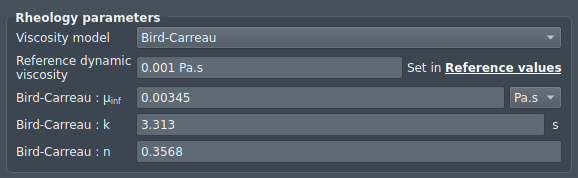
Bird-Carreau
\[
\nu = \nu_\infty + (\nu_0 – \nu_\infty) \left[ 1 + (k \dot{\gamma})^{a} \right]^{\frac{n-1}{a}}
\]
transportModel BirdCarreau;
nu0 [ 0 2 -1 0 0 0 0 ] 1e-03;
nuInf [ 0 2 -1 0 0 0 0 ] 1e-05;
k [ 0 0 1 0 0 0 0 ] 1;
n [ 0 0 0 0 0 0 0 ] 0.5;
While this release introduces the Bird–Carreau model as the first available non-Newtonian viscosity formulation, the framework is designed to support additional rheological models, that are already available within OpenFOAM,
- Power Law
- Cross Power Law
- Casson
- Herschel-Bulkley
as well as custom models defined by the user.
Application to the FDA Pump Benchmark
As an illustrative example, the generalized Newtonian models are applied to the FDA centrifugal pump benchmark case. Detailed information regarding the geometry, meshing strategy, numerical setup, and simulation parameters — including a downloadable reference case — is available at FDA pump benchmark.
![FDA-pump-geometry-front-z-view-dimensions[1]](https://www.cfdsupport.com/wp-content/uploads/elementor/thumbs/FDA-pump-geometry-front-z-view-dimensions1-pjzdwbddx9u0y6nxj94waklxwbq7aqg65clgq9ybk0.png "FDA-pump-geometry-front-z-view-dimensions[1]")
![FDA-pump-geometry-front-meridional-x-view-dimensions[1]](https://www.cfdsupport.com/wp-content/uploads/elementor/thumbs/FDA-pump-geometry-front-meridional-x-view-dimensions1-r0ezm4zmj4ew4eao7i9q9r4habp2ow5h5kpao2eqkg.png "FDA-pump-geometry-front-meridional-x-view-dimensions[1]")
Detailed information on the geometry, meshing, and numerical setup can be found at FDA pump benchmark.
As a brief reminder, the benchmark geometry represents a small centrifugal blood pump. The acrylic rotor is designed as a disk with four filleted blades arranged orthogonally on the rotor base and mounted on a stainless steel shaft.
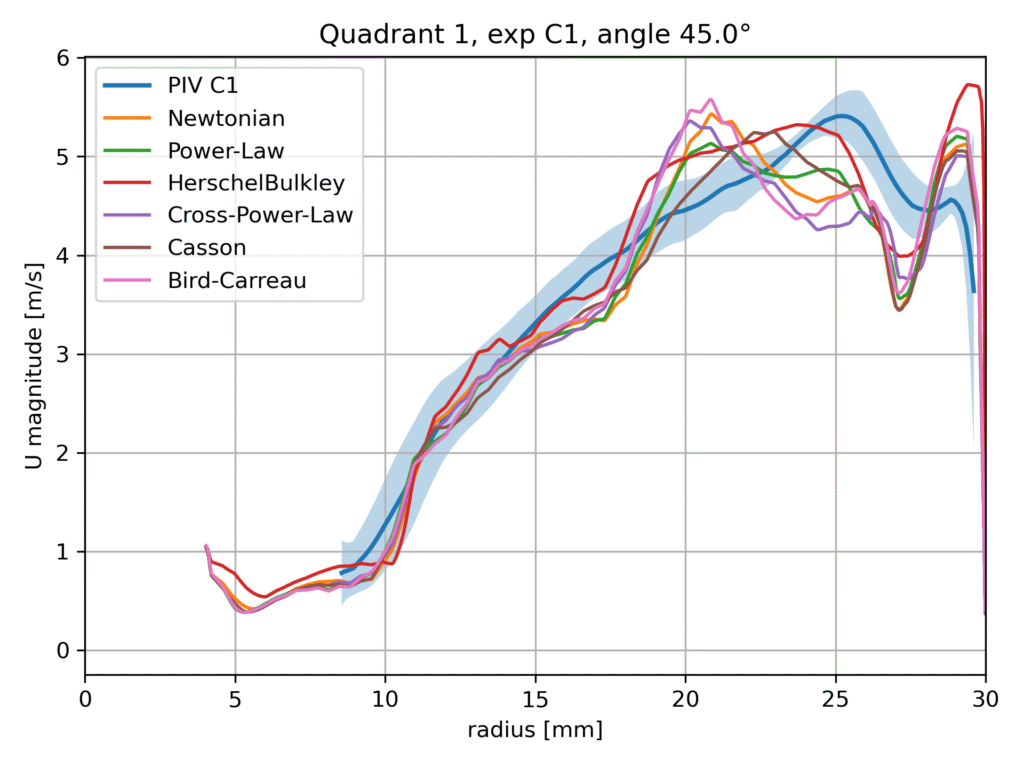
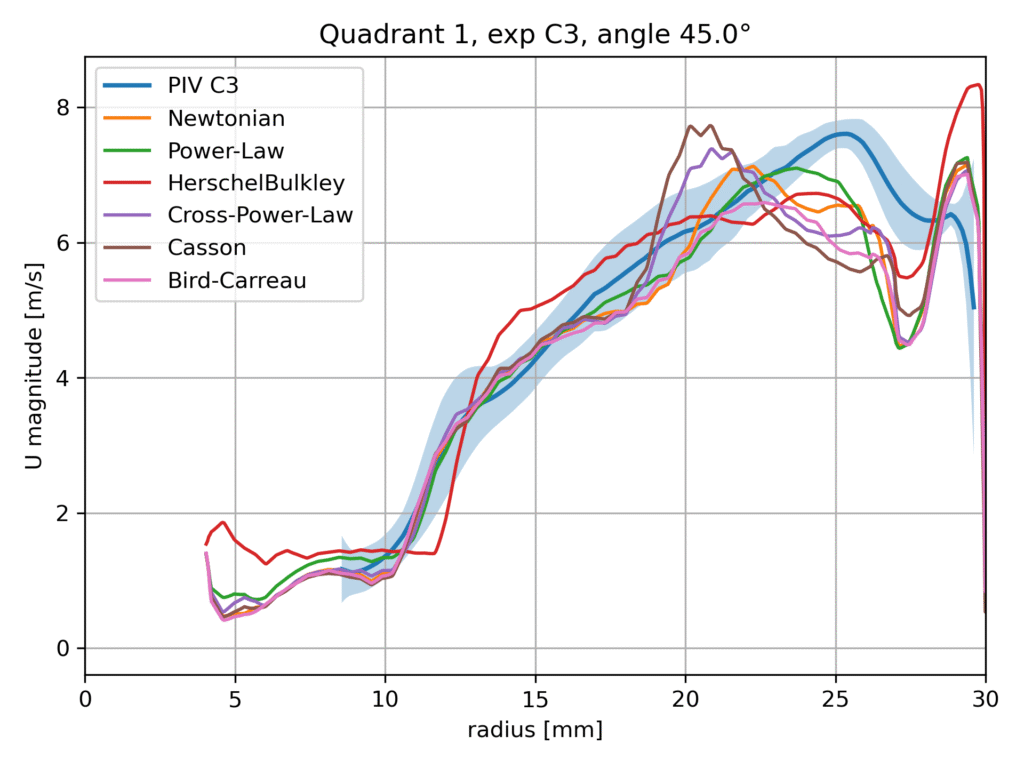
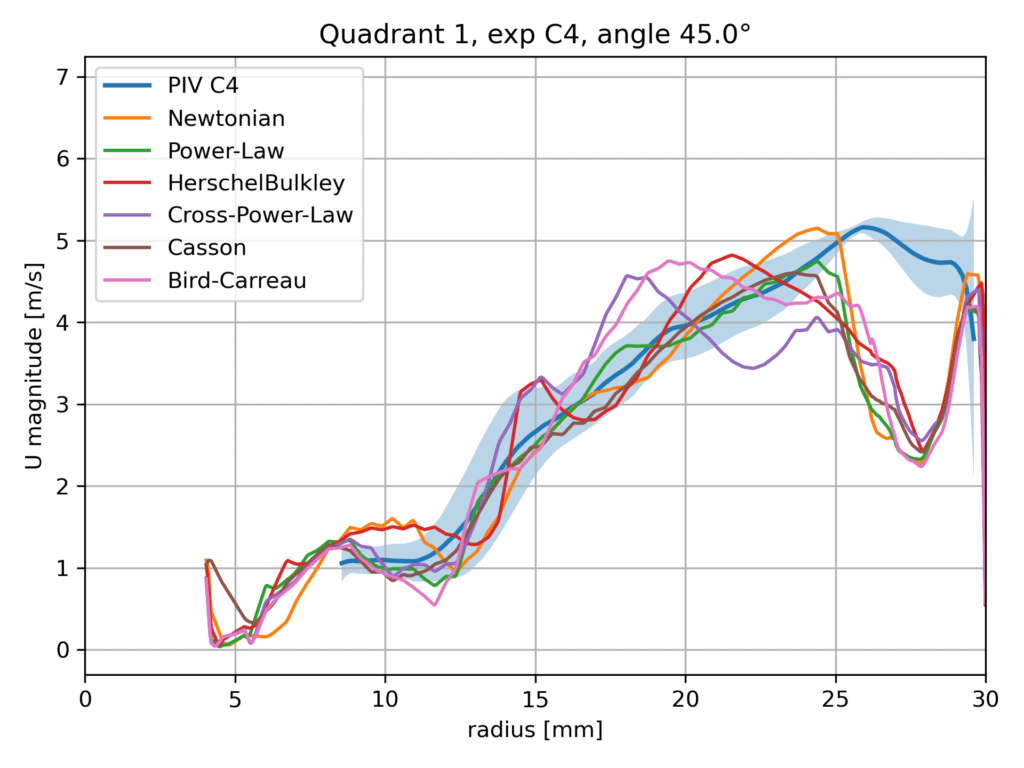
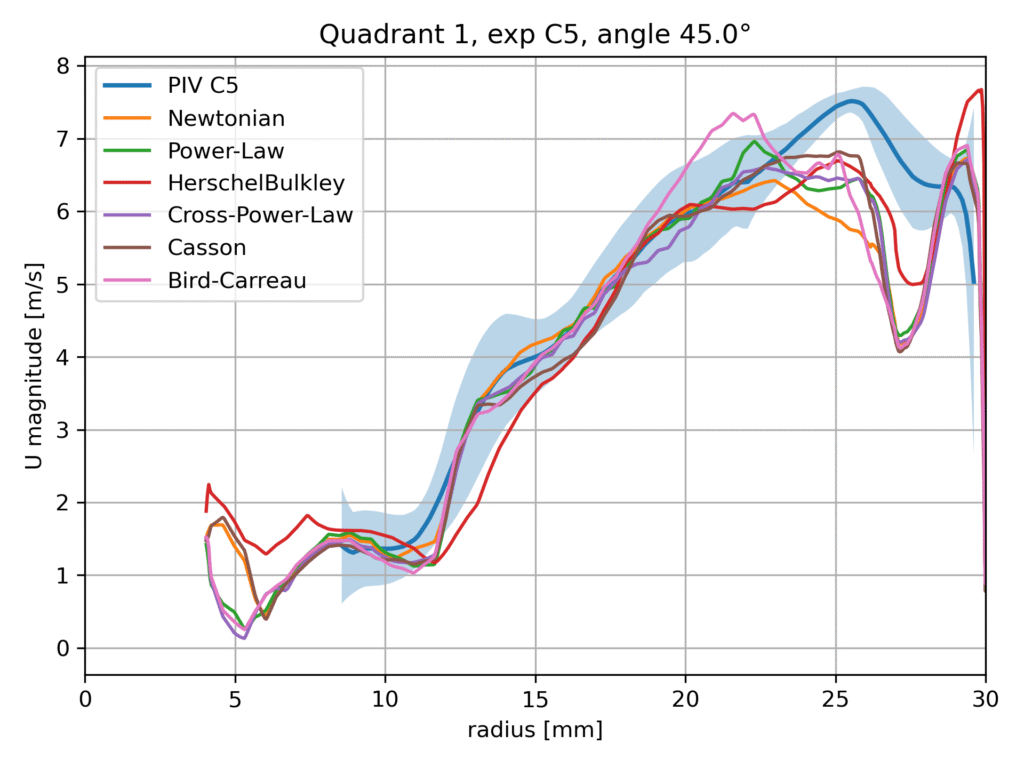
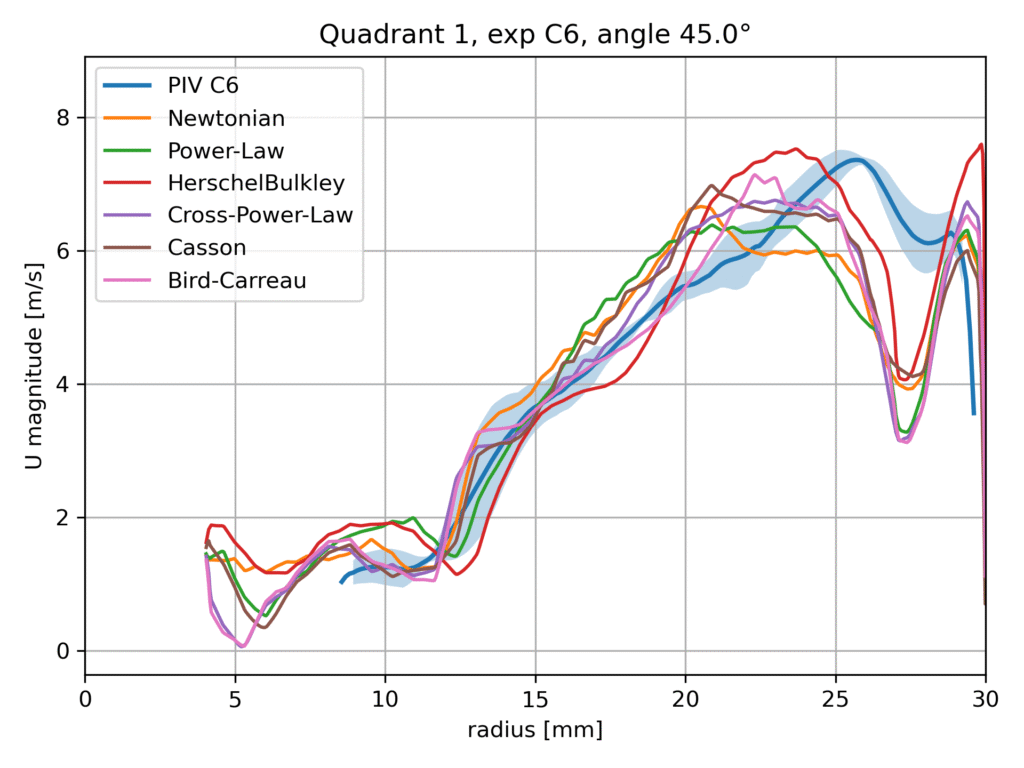
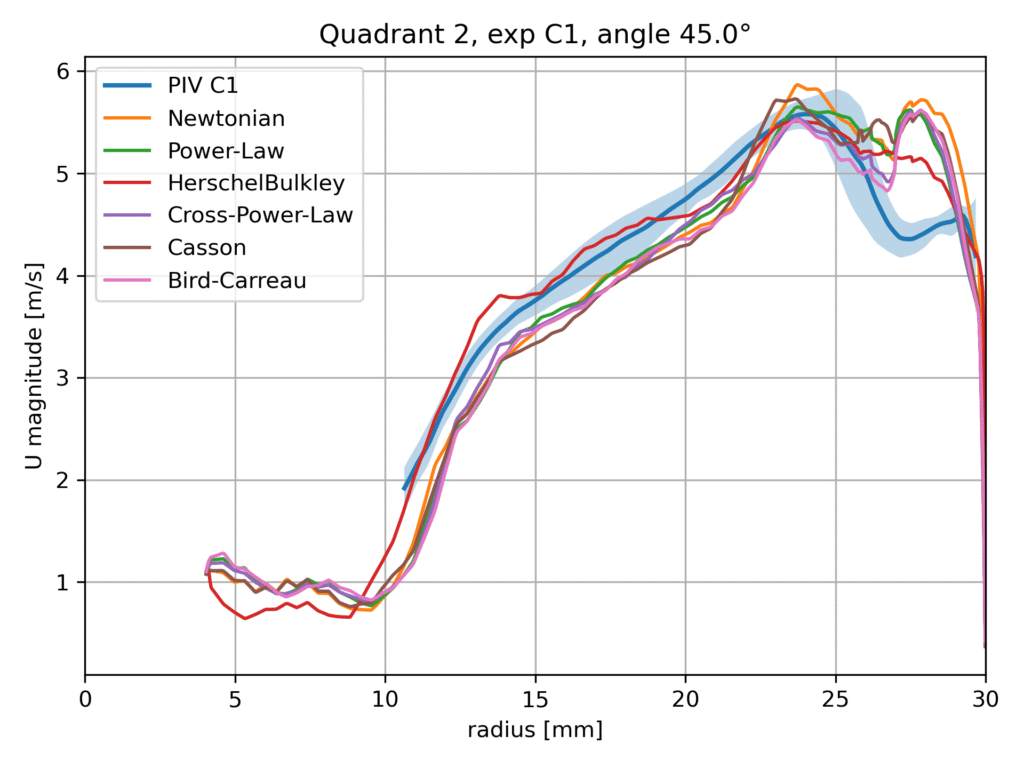
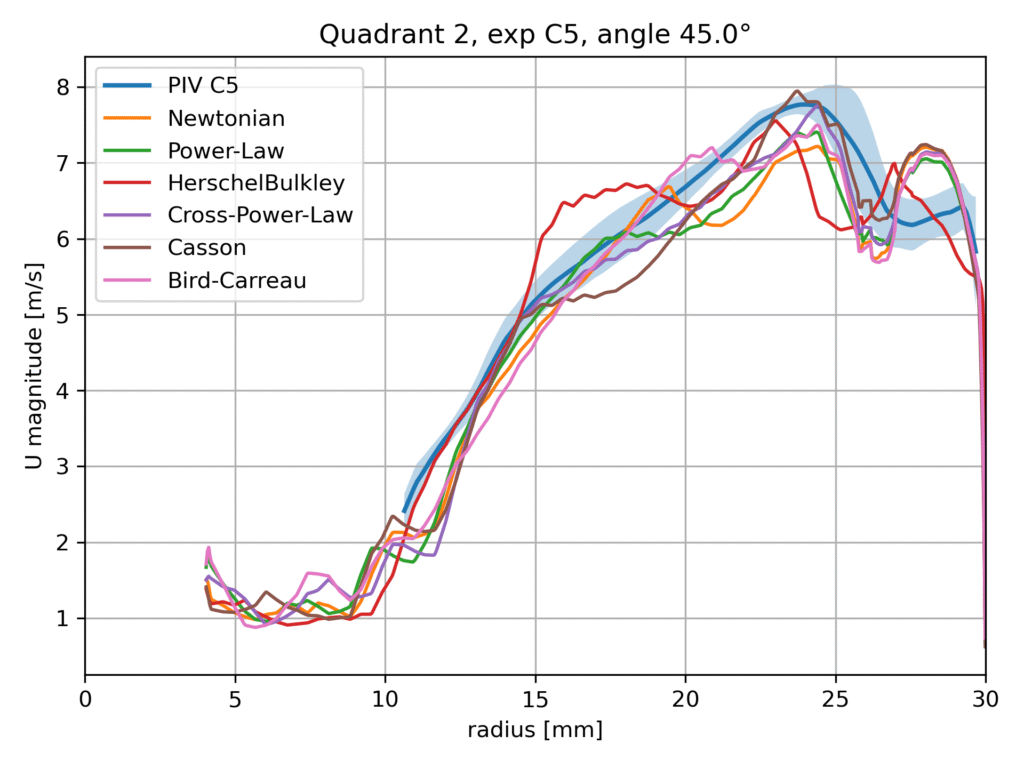
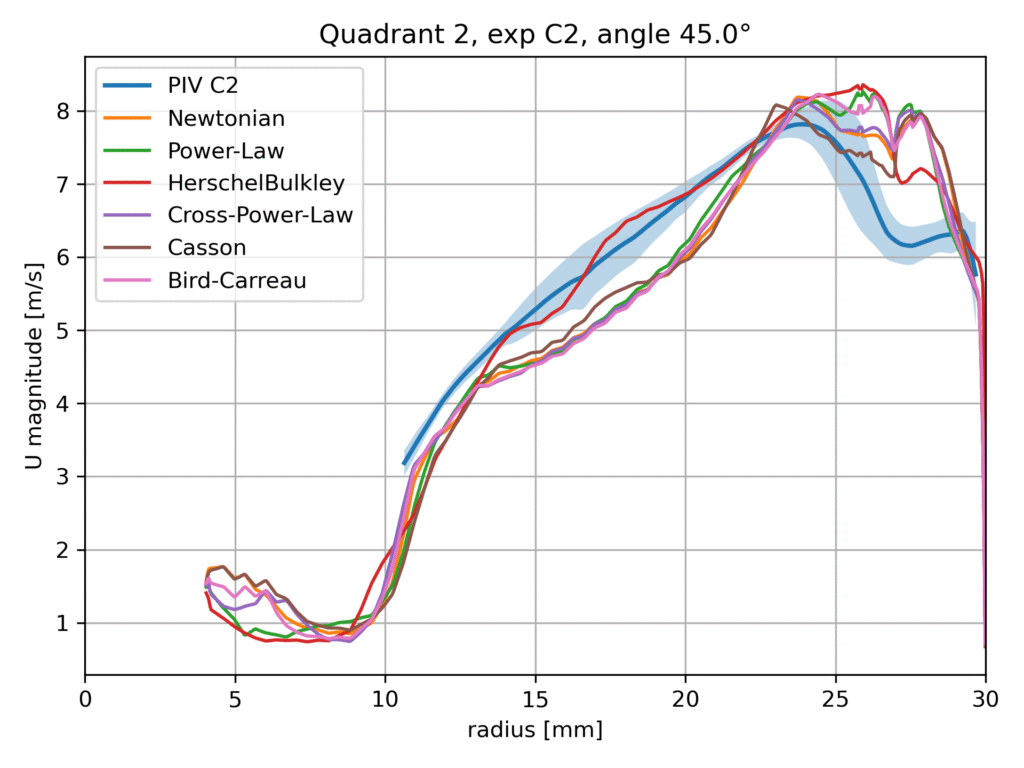
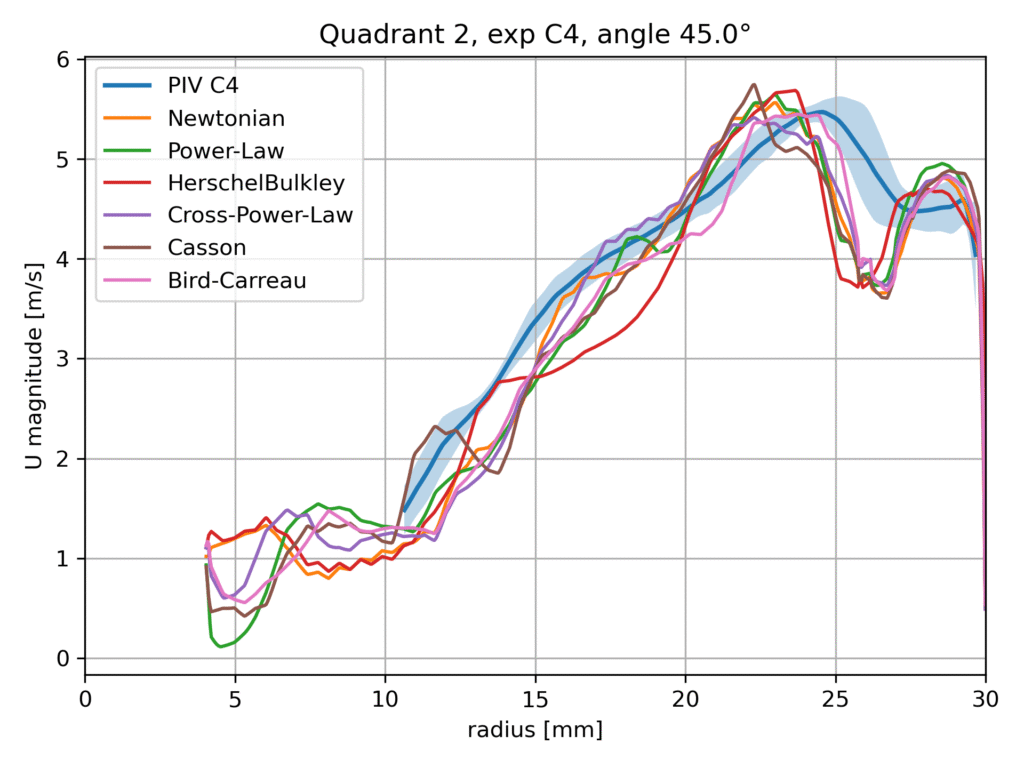
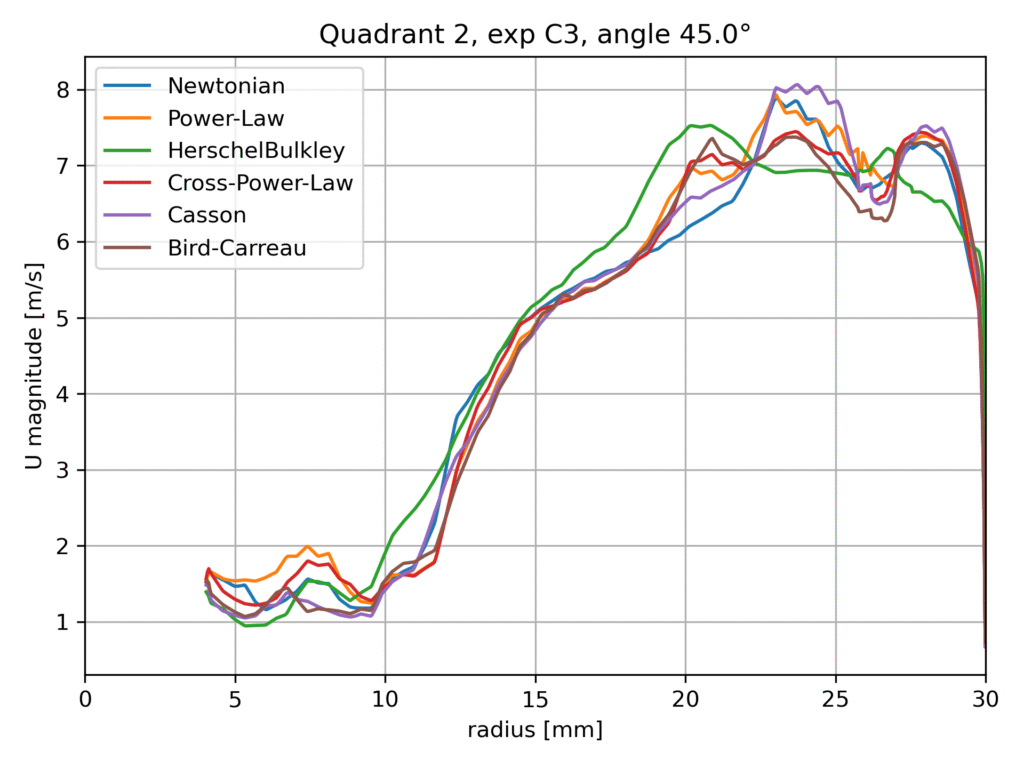
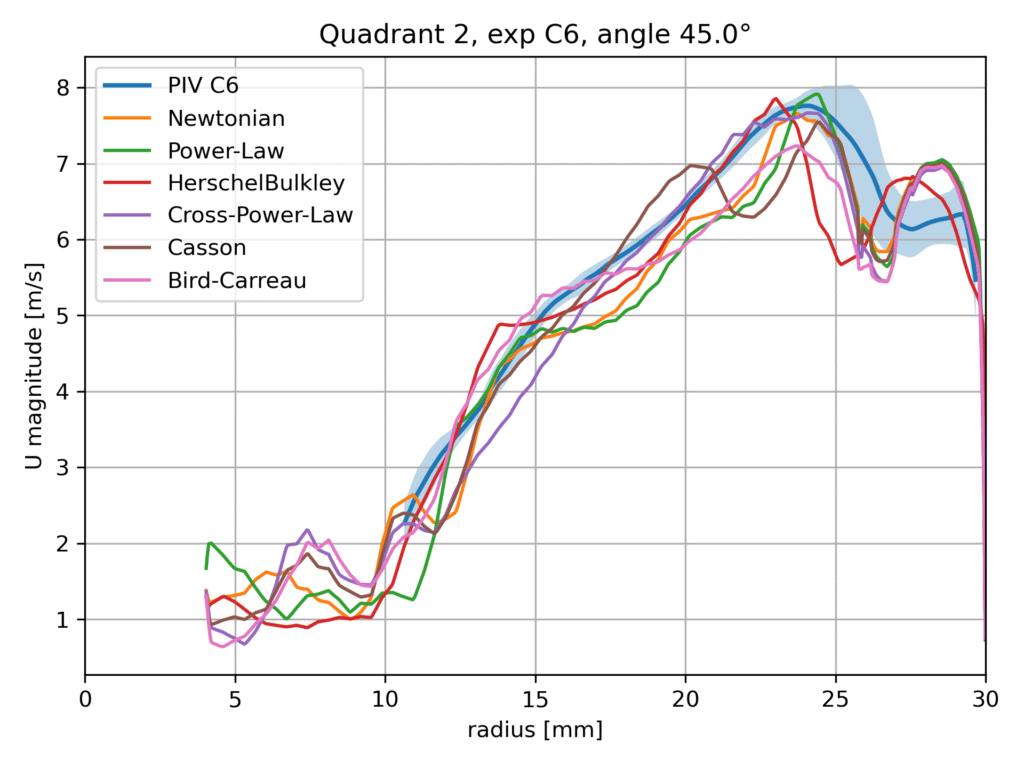
Within this benchmark configuration, different rheological models are evaluated and compared against the available experimental data, including Particle Image Velocimetry (PIV) measurements. The aim of this comparison is not to identify a universally superior model, but rather to assess the sensitivity of the predicted flow field to the chosen viscosity formulation and to examine the consistency of the numerical results with experimental observations.
In the context of blood flow modelling, the determination of appropriate model parameters is not straightforward. In practice, rheological parameters are typically obtained from dedicated experiments and subsequently calibrated based on measured flow behaviour. As such, parameter selection may vary depending on the experimental dataset and operating conditions considered.
This is precisely where our optimisation workflow proves particularly valuable, as it is well suited for systematic calibration and refinement of rheological model parameters for a given application case.
Tested Models:
Within this benchmark configuration, different rheological models are evaluated and compared against the available experimental data, including Particle Image Velocimetry (PIV) measurements. The aim of this comparison is not to identify a universally superior model, but rather to assess the sensitivity of the predicted flow field to the chosen viscosity formulation and to examine the consistency of the numerical results with experimental observations.
Several rheological models available in OpenFOAM were considered.
The constitutive equations and associated model coefficients, including their units, are summarized here.
Bird-Carreau
\[
\nu = \nu_\infty + (\nu_0 – \nu_\infty) \left[ 1 + (k \dot{\gamma})^{a} \right]^{\frac{n-1}{a}}
\]
transportModel BirdCarreau;
nu0 [ 0 2 -1 0 0 0 0 ]
nuInf [ 0 2 -1 0 0 0 0 ]
k [ 0 0 1 0 0 0 0 ]
n [ 0 0 0 0 0 0 0 ]
Power Law
\[ \nu = k \dot{\gamma}^{\,n-1}, \qquad \nu_{\min} \le \nu \le \nu_{\max} \]
transportModel powerLaw
nuMax [ 0 2 -1 0 0 0 0 ]
nuMin [ 0 2 -1 0 0 0 0 ]
k [ 0 2 -1 0 0 0 0 ]
n [ 0 0 0 0 0 0 0 ]
Herschel-Bulkley
\[
\nu = \min\!\left(\nu_0,\; \frac{\tau_0}{\dot{\gamma}} + k \dot{\gamma}^{\,n-1}\right)
\]
transportModel HerschelBulkley
nu0 [ 0 2 -1 0 0 0 0 ] 1e-03;
tau0 [ 0 2 -2 0 0 0 0 ] 1;
k [ 0 2 -1 0 0 0 0 ] 1e-05;
n [ 0 0 0 0 0 0 0 ] 1;
Cross Power Law
\[
\nu = \nu_\infty + \frac{\nu_0 – \nu_\infty}{1 + (m \dot{\gamma})^{n}}
\]
transportModel CrossPowerLaw
nu0 [ 0 2 -1 0 0 0 0 ]
nuInf [ 0 2 -1 0 0 0 0 ]
m [ 0 0 1 0 0 0 0 ]
n [ 0 0 0 0 0 0 0 ]
Casson
\[ \nu = \left(\sqrt{\frac{\tau_0}{\dot{\gamma}}} + \sqrt{m}\right)^2 \]
transportModel Casson
m [ 0 2 -1 0 0 0 0 ]
tau0 [ 0 2 -2 0 0 0 0 ]
nuMax [ 0 2 -1 0 0 0 0 ]
nuMin [ 0 2 -1 0 0 0 0 ]
The table below summarizes the specific coefficients used in the simulations for each rheological formulation. Since the tested models differ in their constitutive equations, not all parameters are required for every model, which is reflected by the missing entries in the table.
| Coefficients / Models | Power Law | Cross Power Law | Casson | Herschel-Bulkley | Bird-Carreau |
|---|---|---|---|---|---|
| nuMax | 5.28e-05 | X | 13.3333e-6 | x | x |
| nuMin | 3.25e-06 | x | 3.9047e-6 | x | x |
| nuInf | x | 3.25e-06 | x | x | 3.25e-06 |
| nu0 | x | 3.38e-06 | x | 3.38e-06 | 3.38e-06 |
| m | x | 3.313 | 3.934986e-6 | x | x |
| n | 0.6 | 0.3568 | x | 0.6 | 0.3568 |
| k | 3.30e-05 | x | x | 3.30e-05 | 3.313 |
| tau0 | x | x | 2.9032e-6 | 1.65e-05 | x |
In the context of blood flow modelling, the determination of appropriate model parameters is not straightforward. In practice, rheological parameters are typically obtained from dedicated experiments and subsequently calibrated based on measured flow behaviour. As such, parameter selection may vary depending on the experimental dataset and operating conditions considered.
In this comparison, the selected parameter values should therefore be regarded as representative rather than definitive
Benchmark Results
In the following section, the CFD results are compared with the corresponding experimental measurements. The PIV data for the six operating conditions considered here were made publicly available by the U.S. Food and Drug Administration (FDA) through the CFD and Blood Damage Benchmarks repository. [1]
| Experiment Conditions | Flow rate [L/min] | Rotational speed[rpm] | Q1 | Q2 | Diffuser | Cutwater |
|---|---|---|---|---|---|---|
| 1 | 2.5 | 2500 | ✅ | ✅ | ✅ | x |
| 2 | 2.5 | 3500 | ✅ | ✅ | ✅ | x |
| 3 | 4.5 | 3500 | ✅ | x | x | x |
| 4 | 6 | 2500 | ✅ | ✅ | ✅ | x |
| 5 | 6 | 3500 | ✅ | ✅ | ✅ | ✅ |
| 6 | 7 | 3500 | ✅ | ✅ | ✅ | x |
Blade Passage (First Quadrant)
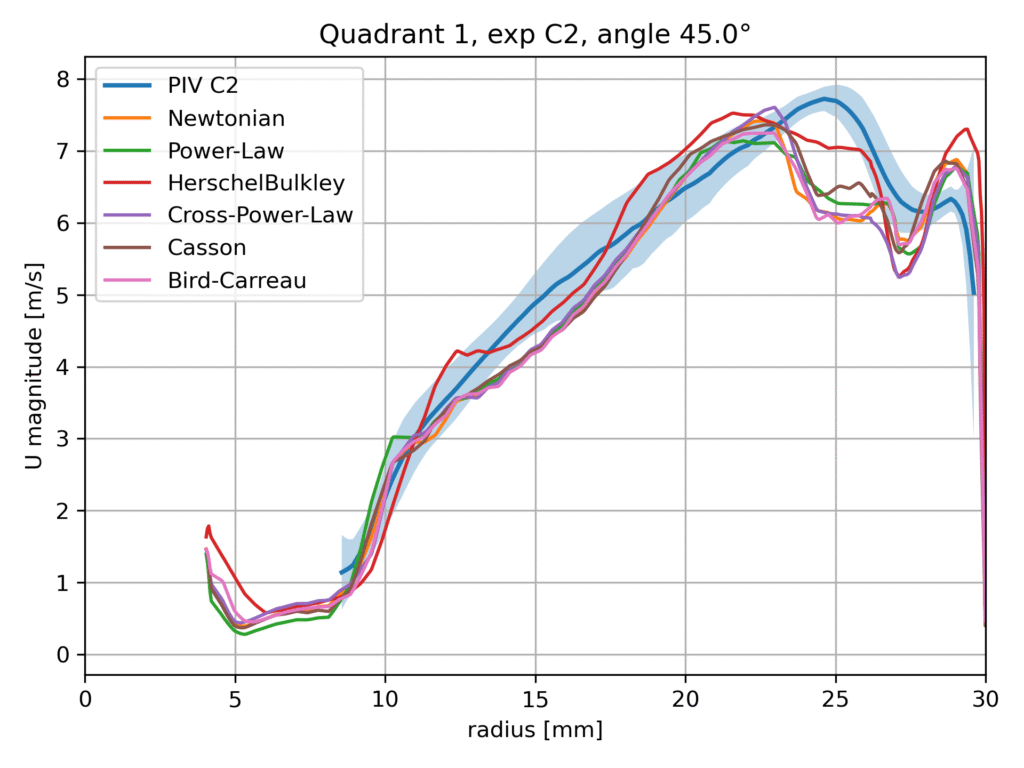
Blade Passage (Second Quadrant)
Optimization
Accurate calibration of rheological model parameters is essential for reliable prediction of non-Newtonian fluid behaviour. Since the viscosity response strongly depends on the selected coefficients, identifying appropriate parameter values represents a key step in practical applications.
Within our environment, the TOPT optimization framework enables systematic calibration of rheological model parameters. Using this approach, the coefficients of the selected viscosity model can be automatically fitted to experimental measurements or reference data by minimizing a predefined objective function that quantifies the difference between simulated and measured behaviour.
While the present example focuses on blood rheology, the same workflow can be applied to a wide range of non-Newtonian fluids, enabling efficient calibration of viscosity models for various industrial and scientific applications.
References
[1] U.S. Food and Drug Administration (FDA). (2024). CFD and Blood Damage Benchmarks – Blood Pump Data [Data set]. GitHub. https://github.com/OSEL-DAM/CFD-and-Blood-Damage-Benchmarks/tree/main/Blood%20Pump/Data
[2] Hariharan et al. Inter-Laboratory Characterization of the Velocity Field in the FDA Blood Pump Model Using Particle Image Velocimetry (PIV), CVET Journal 2018, https://doi.org/10.1007/s13239-018-00378-y
[3] Malinauskas et al. FDA Benchmark Medical Device Flow Models for CFD Validation, ASAIO Journal, 2017, DOI: 10.1097/MAT.0000000000000499
[4] Ponnaluri et al. Comparison of Interlaboratory CFD Simulations of the FDA Benchmark Blood Pump Model, ASAIO Journal, doi: 10.1097/01.mat.0000840776.68172.99
[5] https://www.cfdsupport.com/fda-pump-simulation-benchmark/
[6] CFD Direct Ltd. (2025). OpenFOAM User Guide, Version 12 — Transport/rheology models: Section 8.3.1. Retrieved from https://doc.cfd.direct/openfoam/user-guide-v12/transport-rheology#x46-2510008.3.1
[7] TCAE Training
[8] TCAE Manual
[9] TCAE Webinars