
Human Upper Airways
The mathematical modeling and numerical simulation of respiratory flows present very complex and computationally expensive problem. One of the primary difficulties arises from the complicated branching structure of the bronchial airways. The intricate flow patterns and dynamics within this geometry require the generation of high-resolution computational grids, which are essential for performing detailed simulations of turbulent flows. These simulations have to accurately capture the large gradients in the solution fields, including flow jets, vortices, and boundary layers. Therefore, the accuracy of the solution is critically dependent not only on the quality of the grid but also on the numerical discretization methods employed. [2]
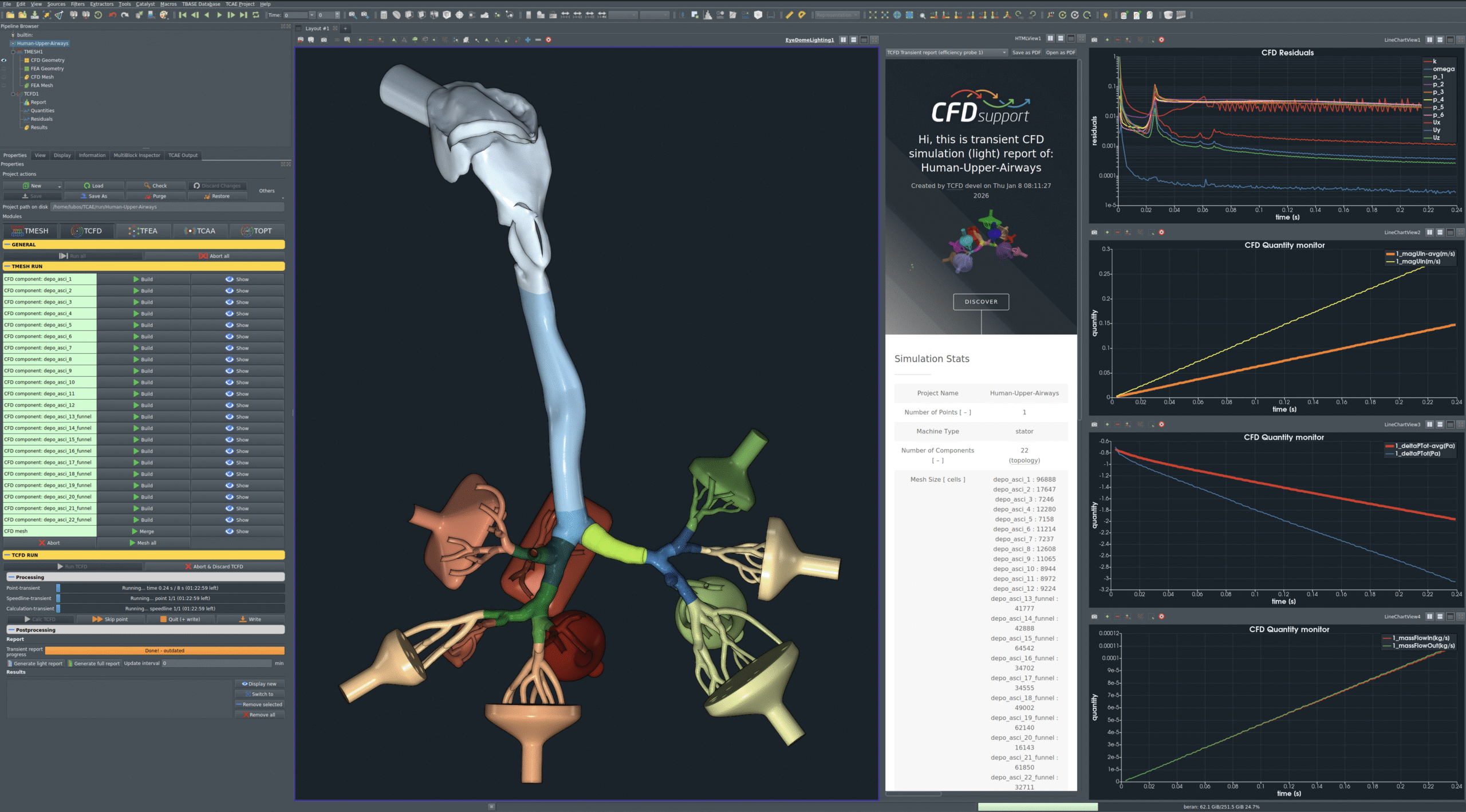
In the present shared case Human Upper Airways, the geometry, mesh resolution, and numerical setup have been deliberately chosen to provide a computationally feasible and user-accessible simulation framework.
The case is intended to be easily runnable with lower computational resources, making it suitable for demonstration. For this reason, the mesh quality and solver settings represent a compromise between numerical accuracy and computational cost.
It should be emphasized that this case does not aim to represent a fully optimized or physiologically detailed model of HUA. Further improvements would be required to enhance the physical realism of the simulations, including for example local mesh refinement in regions of high flow complexity, improved near-wall resolution, application of more realistic boundary conditions and so on.
The shared setup therefore serves as a baseline configuration.
The complete simulation workflow is executed within the TCFD GUI in ParaView, providing an intuitive environment for setting up, running, and monitoring the entire CFD pipeline. The CFD meshing is handled by the TCAE module TMESH, which manages the generation and customization of the computational grid. The CFD solver itself is operated through the TCAE module TCFD, leveraging the capabilities of the OpenFOAM open-source application to perform the numerical simulation.
This modular structure enables the user to build, adapt, and execute complex simulation workflows without leaving the unified interface. Moreover, the current setup naturally lends itself to extending the simulation with additional TCAE modules: TFEA for structural analysis, TCAA for aeroacoustics, and TOPT for design optimization. These modules can be seamlessly combined to explore fluid–structure interaction, acoustic, or automatization, depending on the specific research objectives.
Geometry Description
The geometry adopted in this case was taken from the ERCOFTAC database (Application Challenge AC7-01 [1] ).
This model (Lizal et al., 2012) was constructed from two distinct realistic geometries that were connected at the trachea: a digital bronchial tree derived from the HRCT-based model of Schmidt et al. (2004), supplemented with the oral cavity from the LRRI “A model” (Zhou & Cheng, 2005).
| Left | Right | ||||
|---|---|---|---|---|---|
| Branch | Length (mm) | Diameter (mm) | Branch | Length (mm) | Diameter (mm) |
| L1 | 42 | 10 | R1 | 13 | 13 |
| L2 | 16 | 6 | R2 | 24 | 9 |
| L3 | 7 | 6 | R3 | 21 | 8 |
| L4 | 3 | 6 | R4 | 6 | 8 |
| L5 | 6 | 5 | R5 | 14 | 6 |
| L6 | 10 | 6 | R6 | 6 | 8 |
| L7 | 9 | 5 | R7 | 9 | 6 |
| R8 | 7 | 5 | |||
| R9 | 4 | 7 | |||
| R10 | 4 | 5 | |||
| R11 | 8 | 4 | |||

The airway model extends only to the seventh bifurcation, and all distal branches are merged into funnel-shaped outlets, corresponding to the configuration used in their reference experiments.
CFD Preprocessing
For CFD simulations, it is often advantageous to split the model into several watertight components, which in this case primarily provides greater flexibility in mesh generation. The STL geometry distributed through ERCOFTAC is already segmented in this way and prepared for numerical simulations.
Our workflow is designed to efficiently handle even a large number of such components, ensuring smooth processing and consistent mesh quality across the entire model.
Moreover, this approach ensures scalability for future extensions of the geometry, including the addition of new branches, pathological features, or compliant sections, without disrupting the established meshing workflow.
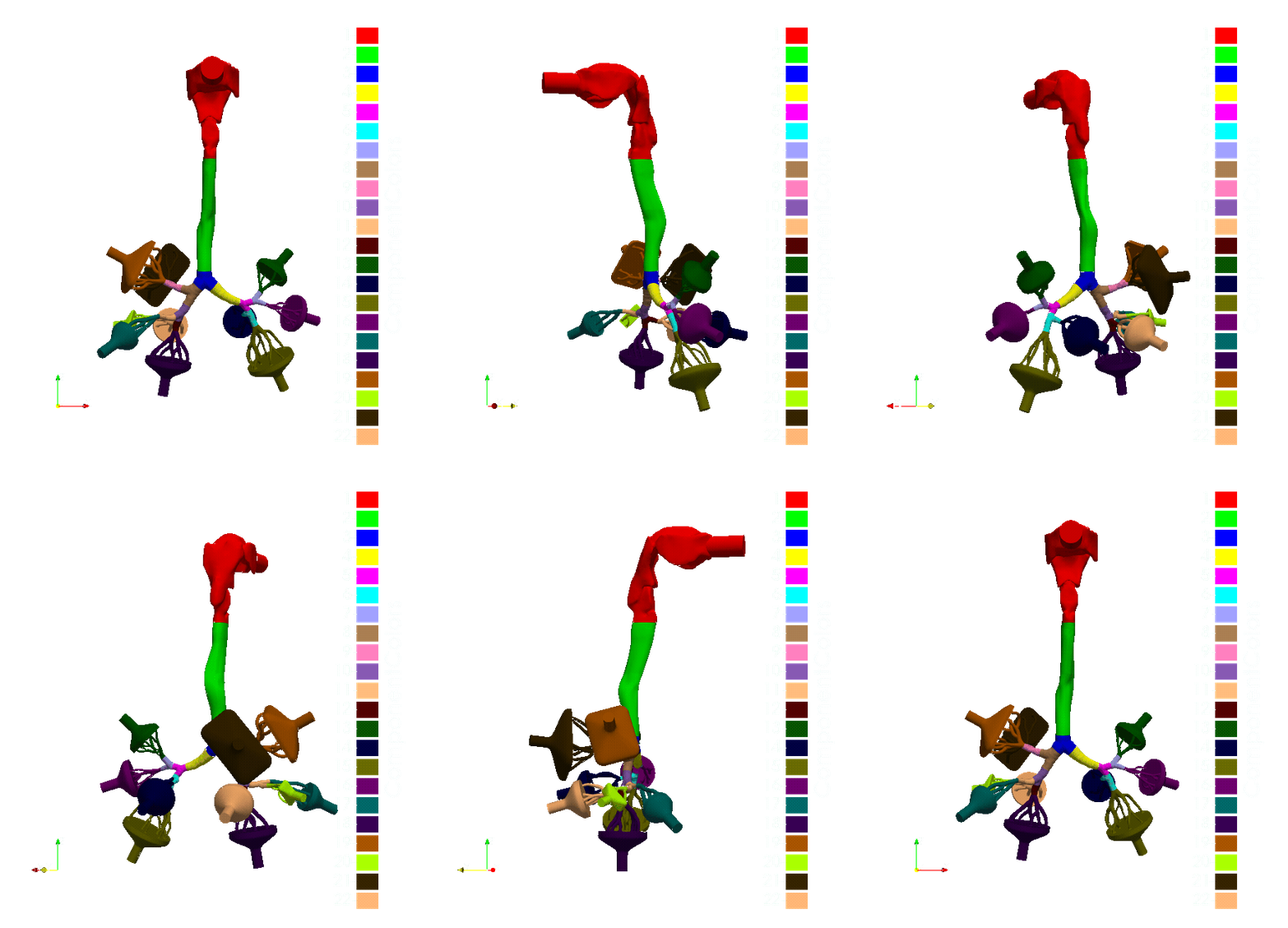
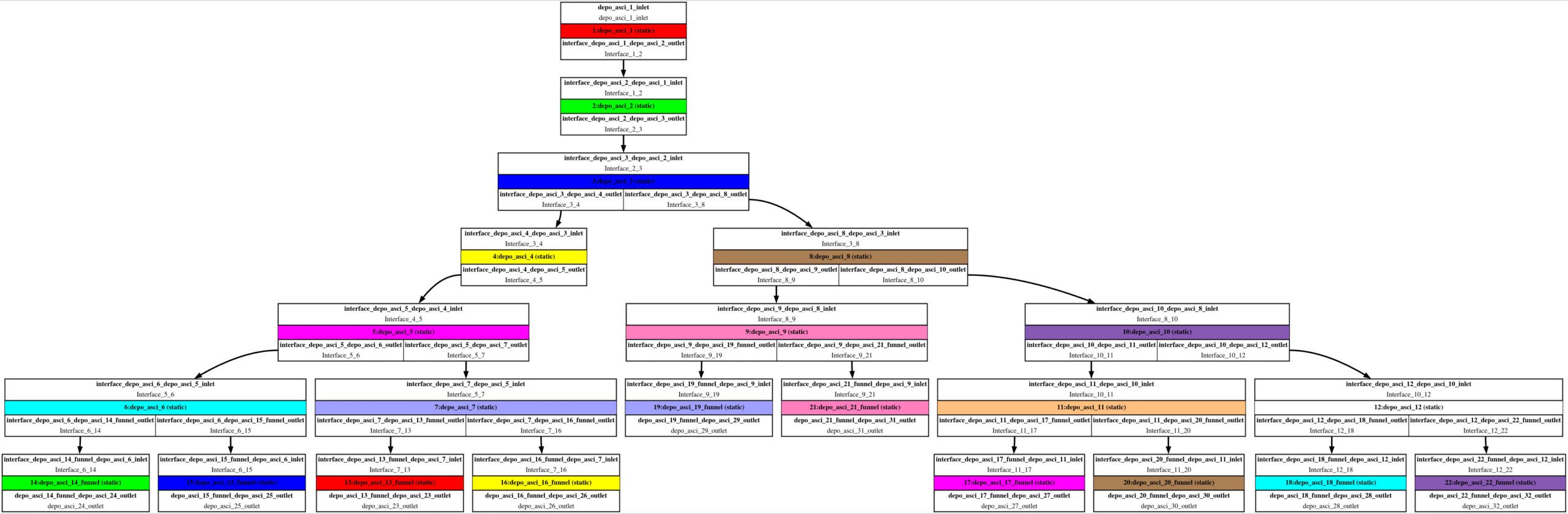
The components map additionally simplifies the validation of the segmented model by offering a clear visual representation of how individual parts are interconnected. This structured overview not only helps confirm that all branches are correctly linked and consistently labeled, but also supports troubleshooting in case of missing or incorrectly assigned components. As a result, potential issues can be identified and resolved before other stages
CFD Meshing
Each component is meshed separately, ensuring full control over the discretization of individual parts of the geometry. The computational mesh is generated in an automated workflow using snappyHexMesh, where each model segment starts from a Cartesian background block mesh that is subsequently refined according to user-defined settings. The refinement levels can be easily adjusted, allowing the resulting mesh to be coarser or finer depending on the required numerical resolution and available computational resources.
Although snappyHexMesh is seamlessly integrated into the workflow, it is not mandatory. The system supports the direct import of externally created meshes, enabling users to integrate meshes generated in other applications. External meshes can be loaded in MSH, CGNS, or OpenFOAM formats, providing full flexibility when selecting or combining meshing strategies.
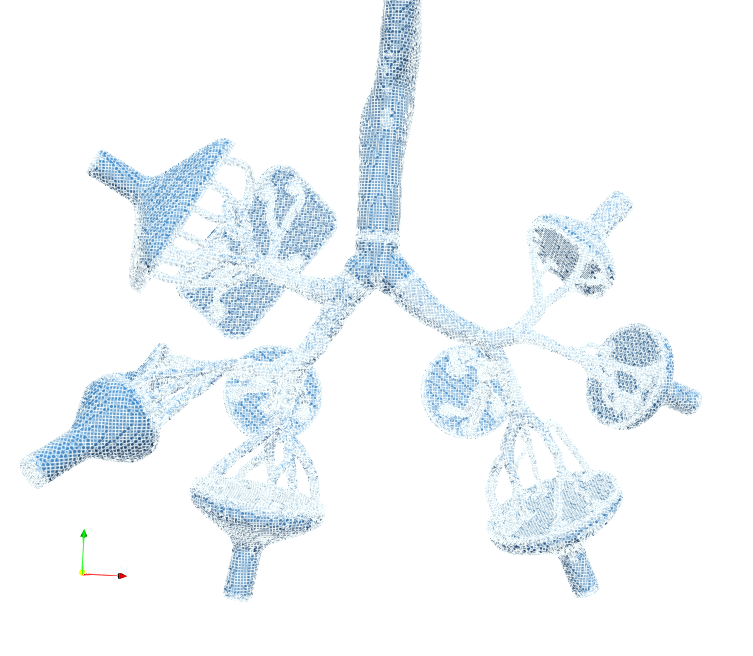
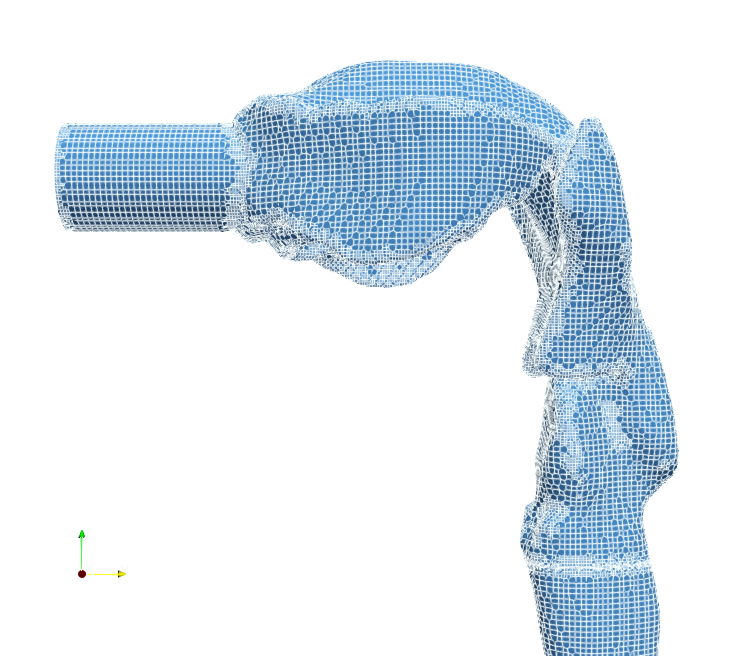
In conventional workflows, defining a valid internal point for each component is essential to ensure that the correct volume is meshed. If this point is misplaced or lies outside the intended region, the mesher may generate an inverted or unintended domain, which can lead to failed runs. As the complexity of the geometry increases, manually specifying internal points for each component becomes progressively more demanding and susceptible to user error.
- Background mesh: Cartesian
- Hexahedra-dominant mesh
- snappyHexMesh
- Number of components: 22 [-]
- Wall roughness: none
- Mesh quality control
- Internal point: Automatic
In our setup, this process is automated through Automatic Internal Point Calculation (25.10 Release), which reliably identifies suitable internal points for all components without user intervention. This feature proves especially beneficial when dealing with larger, highly segmented models, as it not only saves considerable preprocessing time but also significantly reduces the risk of human-induced errors, ensuring a robust and repeatable pipeline.
CFD Simulation Setup
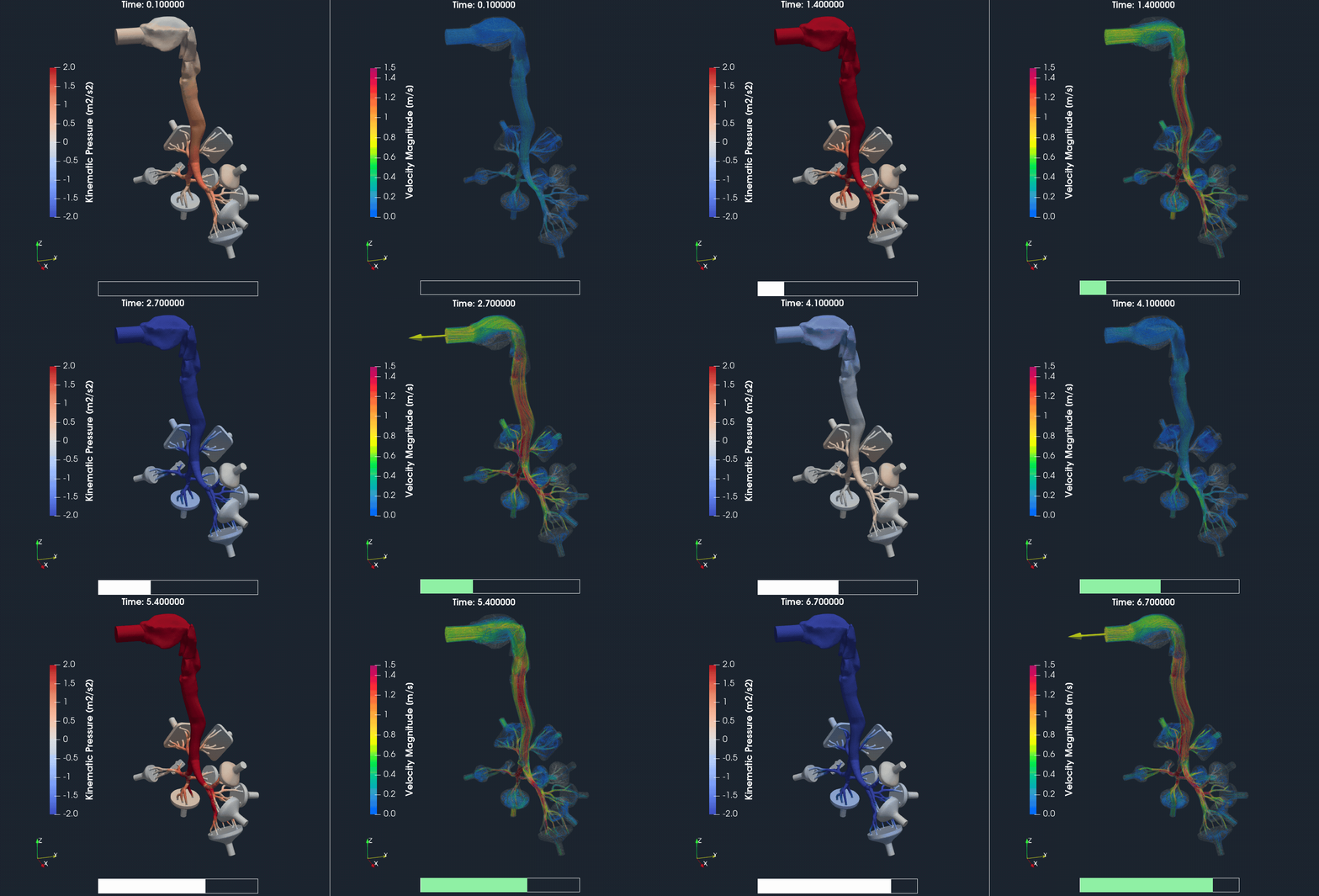
This configuration corresponds to a transient CFD simulation with a deliberately simplified boundary condition setup. The volumetric flow rate is prescribed at the inlet, while a zero static pressure is maintained at the outlet. These boundary conditions remain fixed throughout the simulation.
Fluid
Particles
- TCAE Simulation type: stator
- Time management: transient
- Physical model: Incompressible
- Number of components: 22 [-]
- Wall roughness: none
- Inlet: 15 [l/min]
- Outlet: Static Pressure 0 [m2/s2]
- Gravity
- Turbulence: k-ω-SST
- Turbulence intensity: 5%
- Wall treatment: Wall functions
- Speedlines: 1 [-]
- Simulation points: 1 [-]
- Fluid: Air
- Reference pressure: 1 [atm]
- Lagragian approach
- Forces: Drag
- Injection: Inlet patch
- Particle inlet velocity: (0 0 0) m/s
- Particle density: 500 kg/m³
- Wall treatment: Rebound condition ?
- Particle size: 0.1mm
- Number of particles: 1000
Postprocessing
References
[2] A. Lancmanová, T. Bodnár, Effects of higher order discretization on the predictions of steady turbulent airflow in human respiratory system, Journal of Computational and Applied Mathematics, Volume 466, 2025, 116593, ISSN 0377-0427,
https://doi.org/10.1016/j.cam.2025.116593.
[3] TCAE Training
[4] TCAE Manual
[5] TCAE Webinars
Download TCAE Tutorial - Human Upper Airways
File name: Human-Upper-Airways-TCAE-Tutorial.zip
File size: 24 MB
Tutorial Features: CFD, TCAE, TMESH, TCFD, SIMULATION, INCOMPRESSIBLE FLOW, STEADY-STATE, AUTOMATION, WORKFLOW, SNAPPYHEXMESH, 22 COMPONENTS, Particles, 3D, Finite Volume, CFD, SnappyHexMesh,TCAE environment, OpenFOAM, k-ω-SST, Air